
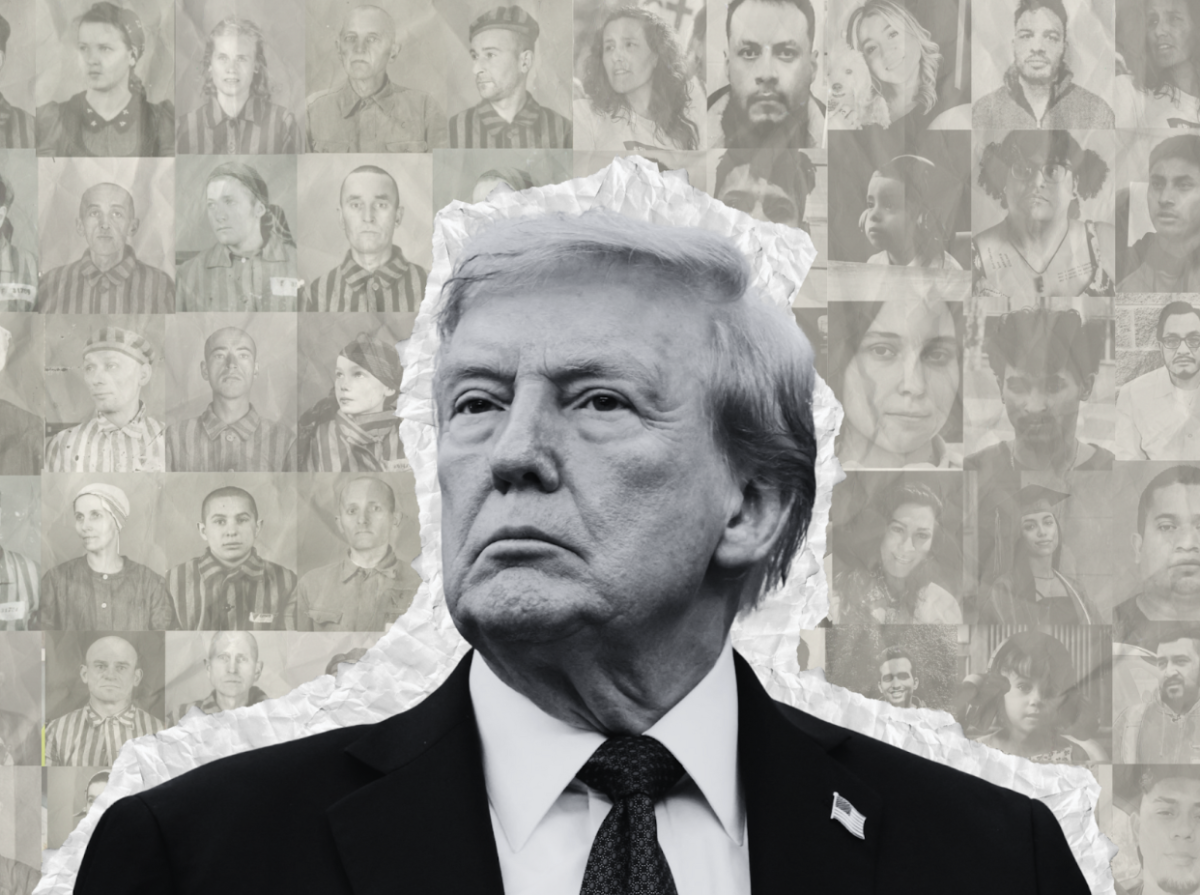
“America has been invaded by criminals and predators. We need YOU to get them out.”
Those are the first words that headline a U.S. Immigration and Customs Enforcement advertisement, calling for students and young adults while offering up to $50,000 as a signing bonus, $60,000 towards student loan repayment, and 25% “premium pay.”
From the infamous concept of building a U.S.-Mexico border wall to halving green card accessibility and reducing immigration admissions, President Donald Trump’s first administration introduced inhumane and legally dubious policies towards immigration, with the majority known for tearing families, businesses, and communities apart.
Since Trump’s induction in January 2025, the administration has resumed its actions primarily against Hispanic and Latino individuals, while also branching out to target African Americans and populations of Korean descent. Within the first few hours of his inauguration, the president moved to block asylum seekers at the border, restrict humanitarian parole and refugee admissions, and sought to end birthright citizenship for children of undocumented parents. In Late January, Trump signed the Laken Riley Act, which requires the detention of noncitizens convicted of specific crimes and directs broader use of immigration detention. Between March and April, the administration expedited removal, began involving the military, limited a new Temporary Protected Status designation, and framed it all as a response to an “invasion.” By mid-spring, he declared a national emergency and publicly promoted plans for what he calls the “largest domestic deportation campaign in U.S. history,” prompting early litigation over the scope of his powers.
In more recent months, Trump has empowered ICE to raid a Hyundai plant–detaining over 300 South Koreans; advertised the disgusting concept of “Alligator Alcatraz”; has targeted Venezuela in striking of Venezuelan ships in international waters; and has questioned the legality of the presence of various high-ranking officials and representatives, including New York mayor Zohran Mamdani and Minnesota representative Ilhan Omar.
ICE raids have also stretched into communities and schools, where officials make a name for themselves through breaking car windows to illegally detain mothers, fathers, and kūpuna, showing up at graduations to arrest students and parents, and tackling sobbing women desperate to find their missing brothers and husbands.
In this climate of fear and aggression, another terrifying consequence has emerged: ICE agent impersonators—men donning fake badges and uniforms to threaten, harass, and even abduct immigrants. In one widely circulated incident from early 2025, a man pulled over a driver on Sullivan’s Island, screaming, “You all got caught! Where are you from, Mexico? You from Mexico? You’re going back to Mexico!” while rattling the driver’s keys and mocking his accent—all under the guise of law enforcement. In another case, a suspect in North Carolina used the threat of deportation to coerce a woman into sexual acts, prompting a national warning from law enforcement about the rise of ICE impersonation crimes. Immigration enforcement is more than valid in a functioning government, though ICE’s actions prove to contradict the legality that these policies tend to follow.
These crimes are committed in enforcement environments, where real ICE agents often operate in plain clothes and unmarked vehicles, making it nearly impossible for communities to distinguish law enforcement from predators. Fear is the weapon, and authority becomes the disguise.
Beyond impersonation, ICE’s actual practices frequently violate constitutional protections. The Fourth Amendment prohibits unreasonable searches and seizures, yet individuals are regularly detained without warrants or probable cause. The Fifth Amendment guarantees due process for individuals on U.S. soil; however, people are often held without a meaningful hearing, access to legal counsel, and clear charges. This is especially egregious given a basic legal fact: being undocumented is a civil violation, not a criminal offense—despite repeated claims from the Trump administration to the contrary.
At the same time, racist rhetoric from political leadership has fueled discriminatory enforcement. Trump and his allies have repeatedly framed immigration as “invasion,” while making explicit racial distinctions over who is welcome. Reports document racist remarks from President Trump targeting Somali communities in Minneapolis, where ICE activity has disproportionately affected Somali Americans—one of the largest Somali populations in the U.S. Trump has also suggested preferential treatment for white African immigrants while denigrating others, reinforcing a racial hierarchy within immigration policy.
This narrative collapses under scrutiny. Decades of research show that immigrants are less likely to commit crimes than native-born Americans—according to studies by the American Immigration Council—directly contradicting the administration’s justification for mass raids and detention. What is unfolding is not a public safety measure—it is a state-sanctioned intimidation tactic, eroding constitutional rights, and placing vulnerable communities at risk.
The result is a system that invites abuse, empowers racism, and treats fear as a policy. It is not just immoral; it is unconstitutional, illegal, and profoundly dangerous. From plantation workers who created pidgin in Hawaii to the renowned cultural melting pots of Los Angeles and New York City, America is a nation built and carried on the backs of migrants. It is crucial to advocate for what is morally and legally right, ensuring that no one’s humanity is negotiable, no one’s rights are conditional, and no one is stripped of their dignity simply for existing within our borders.